

Continuous penetration testing vs. annual pentests: what actually changed
Ask ten vendors what "continuous penetration testing" means and you'll get ten answers, most of them designed to make whatever they already sell sound continuous. The phrase has been stretched to cover manual on-demand tools, weekly re-runs of the same scan, and CI-triggered diffing. Before you can decide whether it's worth moving off the annual engagement, you need to be precise about what the words actually mean, and about what most of the market leaves out.
Why the annual model exists at all
The point-in-time pentest isn't a bad idea. It's a good idea aimed at a world that no longer exists. When software shipped on a waterfall cadence, a major release or two per year, a two-week engagement scheduled just before launch could plausibly cover most of what had changed. The pricing, the fixed-scope statement of work, the PDF report, even the compliance frameworks that require "an annual penetration test" all assume that "the release" is a discrete event you can test around.
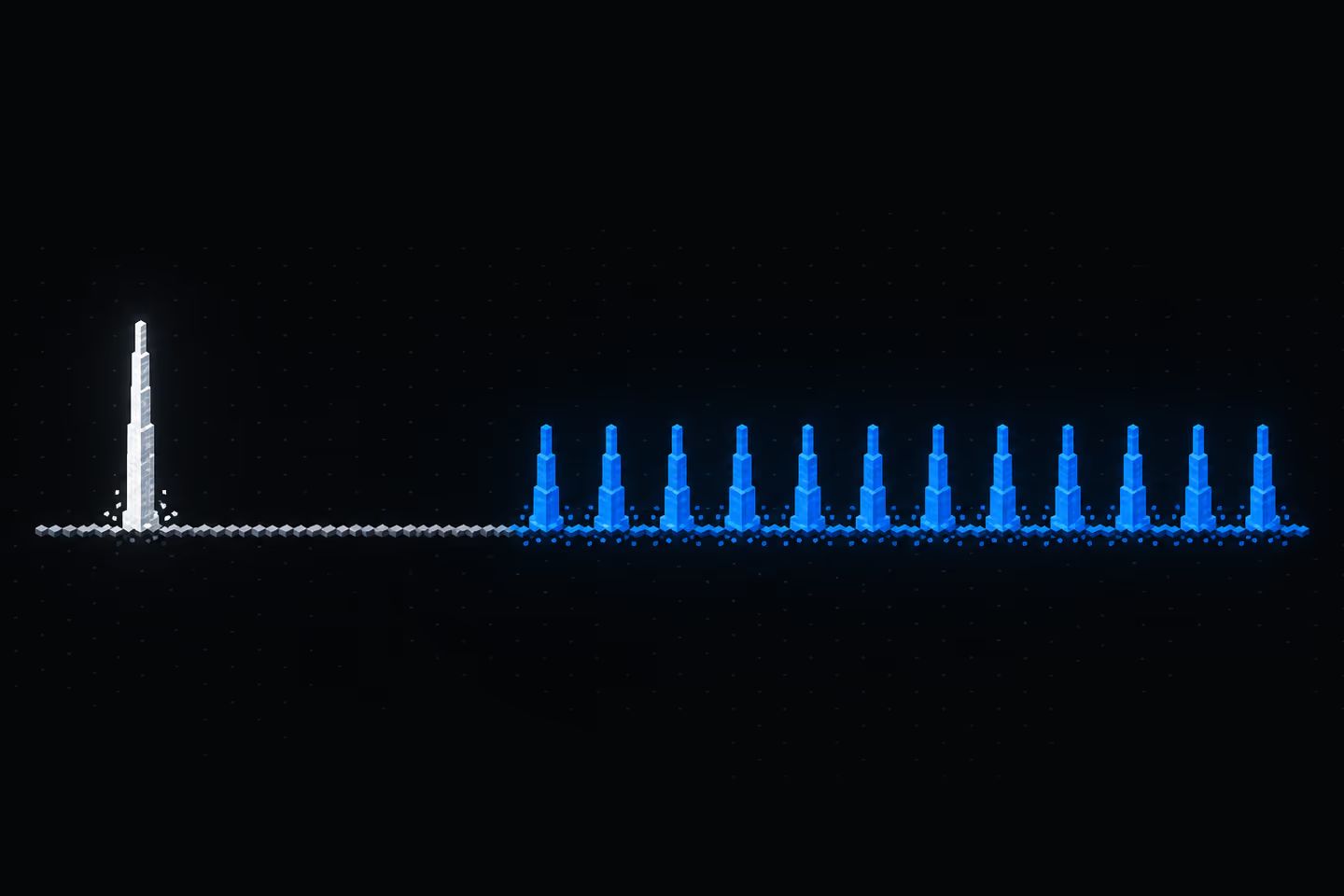
Modern engineering deleted that assumption. The teams we work with deploy anywhere from several times a day to hundreds of times a week. Each deploy can add an endpoint, widen a role, expose a new service, or break an assumption some other control depended on. Against that backdrop, an annual test measures the state of the system on one arbitrary day and hands you a report that begins decaying the moment it's delivered. It isn't wrong so much as mismatched to the medium: it captures a photograph of something that's actually a video.
What "continuous" is supposed to mean
Continuous penetration testing means offensive testing runs automatically and repeatedly against your assets, whether on a recurring cadence, on every meaningful change, or perpetually, so your view of exploitable risk stays current with a surface that changes daily. The goal isn't testing more often as a vanity metric. It's collapsing the window between "an exposure appears" and "someone tells you it's exploitable" from months down to hours.
That's the promise. The problem is that the label gets applied to several very different things:
- On-demand credit pools. You buy a bucket of tests and launch each one by hand. This is "continuous" only in the sense that you can test often; the testing still doesn't happen on its own.
- Scheduled scanners. The same full-scope automated scan re-runs on a weekly or monthly timer. Genuinely recurring, but it re-tests everything blindly and rarely confirms what it finds.
- Diff-based CI/CD testing. Triggered on each deploy, tests the changed code. Genuinely continuous in the pipeline, but narrow: it sees the diff, not the whole reachable surface.
- Always-on agentic testing. A platform probes the live environment continuously, the way an attacker would.
Two patterns fall out of that list. First, several "continuous" offerings are really on-demand tools with a subscription attached. Second, and this is the one that actually costs security teams their weekends, the genuinely automated options almost universally drop human-grade validation. They hand you raw, machine-generated findings, false positives included, and leave your team to sort signal from noise. That's the trade the market has accepted: speed in exchange for trust.
Validation is the part that matters
A finding you can't trust isn't a finding. It's a ticket to go do the pentest yourself. The reason security teams tolerate slow annual engagements is that a human confirmed each result and wrote down how to reproduce it. When automated tooling removes that step, it doesn't make testing faster; it just moves the slow part downstream onto whoever has to triage the queue.
The bar that actually matters isn't "does it run continuously." It's "does it run continuously and prove exploitability before it interrupts an engineer." A scanner that flags a theoretically-vulnerable version string produces noise. A system that chains the request, reaches the sensitive resource, and attaches the evidence produces a fix. The first buys you a bigger backlog; the second buys you closed tickets.

The coverage math nobody puts on the quote
There's a second, quieter reason the annual model leaves gaps: cost forces scope. A human-led pentest is expensive, so it gets scoped down. Two testers, two weeks, the top three applications. The internal admin panel, the legacy API that still has a handful of customers, the codebase from last year's acquisition: those wait for next year, or the year after.
Attackers don't honor your scoping doc. They gravitate toward exactly the assets you didn't budget to test, because that's where the cheap findings live. So most organizations pay premium prices for deep coverage of a thin slice of their surface while the majority of it has never been examined by anyone except the people trying to break in. When the marginal cost of testing one more endpoint approaches zero, "what's in scope" stops being a budget decision and goes back to being what it should always have been: everything you own.
How to tell the difference
If you're evaluating something that calls itself continuous, four questions cut through most of the marketing:
- Does testing initiate itself, or do I? If every test is a human launch, it's on-demand, not continuous.
- Does it test what changed, when it changed? New assets and new code should get tested as they appear, not at the next scheduled cycle.
- Does it validate before it alerts? You want confirmed, reproducible findings, not a raw scanner dump you have to re-verify.
- Does coverage follow my real surface? Discovery and testing should track the assets you actually have, including the ones no one remembered to add to scope.
Where Parameter lands
Parameter was built for the fourth model, always-on and agent-driven, with the validation step kept in. The agents continuously discover your external surface, test it the way an attacker would, and confirm exploitability before anything reaches you, so what shows up in your queue is a real finding with evidence and a fix attached rather than a maybe. Annual engagements still have their place for deep, creative, human-led work; the day-to-day job of keeping pace with what you ship is the part that has to run continuously.
Point-in-time testing tells you what was exploitable on the day you tested. Continuous testing tells you what's exploitable now, and keeps telling you.